W Sogo Kaikei Office — an English-speaking tax accountant (zeirishi) in Koenji, Suginami-ku, Tokyo. Individual and corporate tax returns, company setup, inheritance tax, non-resident rental income and bookkeeping.

Contents About Us Why Choose Us Fees Our Services Common Questions FAQ Tax Articles Access Contact
Su Mo Tu We Th Fr Sa
Hours 9:00–20:00 JST
Closed Sat, Sun and Japanese public holidays
Sogo Kaikei office ACCOUNTING & TAX CONSULTING

Tax Accountant — Koenji, Tokyo

A tax accountant in Koenji, Tokyo.
Tax returns, company setup, property income —we work with you in English.

Handled by the tax accountant himself|First consultation and quote free|Weekdays 9:00–20:00 JST|English・Cantonese・Japanese

Koenji-minami, Suginami-ku, Tokyo
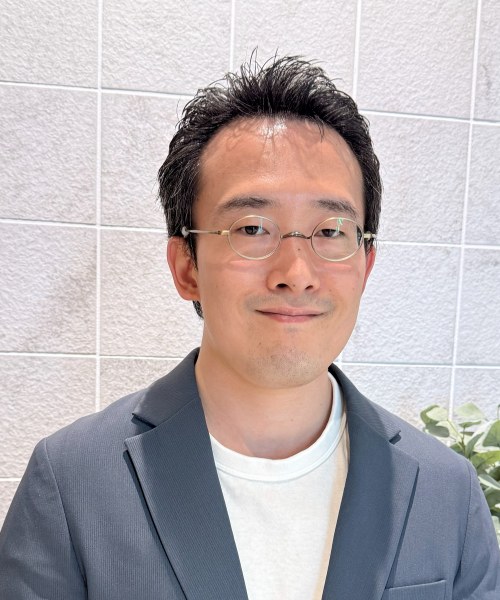
Takumi Watanabe, Tax Accountant
SCROLL
NEW! English & Cantonese support

01

About Us

W Sogo Kaikei Office

About Us

W Sogo Kaikei Office is a tax practice based in Koenji-minami, Suginami-ku, Tokyo. A zeirishi is a Japanese national licence: we may prepare and file tax returns on your behalf, represent you in a tax audit, and advise on tax matters — broadly the role a tax adviser or practising accountant plays in your own country.

A Hong Kong staff member works with us on site, so meetings and correspondence can be handled in English or Cantonese. Japanese tax documents are dense even for fluent speakers — National Tax Agency notices defeat plenty of them. You should not have to spend your energy on the language when the real work is the decision underneath it.

We can take a matter from beginning to end: an individual return for someone living in Japan, setting up a company here, or filing and reclaiming tax on rent from a Japanese property while you live abroad.

See our services →

Representative Profile — The Tax Accountant

Takumi Watanabe, Representative Tax Accountant

Representative Tax Accountant

Takumi Watanabe

Takumi Watanabe, Tax Accountant

Tax accountant registration no. 152521 / Tokyo Zeirishi Association, Suginami Branch

2005

Graduated from Waseda University, School of Political Science and EconomicsJoined Shinkin Central Bank the same year and was posted to the Nagoya branch, where he learned corporate finance and funding from the inside.

2007

Turned professional boxer, running a food truck alongsideHe began boxing while employed, then left a job that forbade outside work to turn professional. He supported himself running an Osaka-style grilled squid food truck through Aichi and Shizuoka while training for a shot at the top. In the Rookie King tournament he won the Central, Western and West Japan rounds to take the West Japan title, then lost the All-Japan final on points. Weighing the recovery time for an orbital floor fracture sustained during the tournament against his age, he retired.

2009

Joined an accounting practiceHe worked at two accounting firms before qualifying as a tax accountant, building broad practical experience across tax and accounting.

2026

Founded W Sogo Kaikei OfficeAfter eighteen years of practice he opened his own office in Koenji-minami, Suginami-ku, Tokyo. Built on honesty and expertise, supporting individuals, companies and inheritance matters alike.

18years

Of practiceExperience

4factors

Fee criteria publishedTransparency

3languages

English・Cantonese・JapaneseLanguages

1business day

We reply withinResponse

02

Reason

Why Choose Us

Why Choose Us

01

The tax accountant handles it himself — and replies quickly

Tax judgements, checking the bookkeeping, preparing the accounts and the return: all of it is done by the representative tax accountant personally. The same tax accountant stays with you from first enquiry to filing — no handover halfway, no tax judgement delegated to unqualified staff, no outsourcing of return preparation to another firm. Because he has read the bookkeeping himself, at year end he can explain what each figure is. You can also reach us directly on LINE. Messages go straight to the tax accountant rather than through reception or an assistant, so replies come back fast and small questions get settled on the spot.

02

Lower fees through automation and online meetings

We use automated bank and receipt imports, automated journal entries and cloud accounting to cut the hours spent on manual data entry. Meetings can be held by video call, LINE or email, so there is no travel time or travel cost to pass on. What we save, we put back into the fee. The fees are lower — not the work.

03

Quoted case by case, and we stand behind it

We do not publish a flat price list. At the same scale, the number of transactions and the state of your records can change the workload several times over. We ask about your situation, agree what we handle and what you handle, then quote with the components itemised. Quotes are free, and once we start we do not add charges without telling you first.

04

You can talk to us in English

A Hong Kong staff member works with us on site, so you do not have to rely on translation apps or on a friend to sit in. Tax turns on small distinctions; being able to describe your situation precisely, in your own words, is itself a safeguard.

05

We already know the situations you are in

Whether side income needs to be declared, when it makes sense to set up a Japanese company, how property and accounts held abroad are treated once you live here, how cross-border resale income is taxed — these are our everyday questions. You will not be explaining from scratch.

06

Property tax matters for non-residents

If you live abroad and own property in Japan, we can act as your tax agent (nozei kanrinin) and file your return and refund claim for you. The 20.42% withheld from your rent can often be partly recovered by filing.

03

Fee

Our Fees

Fees

We do not publish a flat price list. Fees are quoted case by case, against the scope of work actually taken on. All figures are before consumption tax (in Japanese, 税抜 zeinuki); consumption tax in Japan is currently 10%. Quotations are free.

Our Approach — How we set fees

Our fees are on the low side for a tax practice. That is not because the work is thinner.

We use automated bank and receipt imports, automated journal entries and cloud accounting to cut the hours spent on manual entry, and meetings can be held by video call, LINE or email, so there is no visiting and no travel. The time and cost we save goes straight into the fee.

On top of that, rather than publishing a flat price list, we quote case by case against the scope we take on. At the same turnover, or the same estate value, the workload can differ several times over — the number of transactions, how well the records are kept, and how many tax judgements are involved all change the hours required. Rather than name a figure that may not fit, we would rather understand your situation and then give a price we can stand behind. Actual fee examples are set out under the Corporate and Individual tabs below, as a guide to the level.

The first consultation and the quotation are free. Work begins only once you have seen the figure and agreed to it, so nothing is charged at the enquiry stage.

Four things that set the fee

01 Scope

What we handle and what you or your own staff handle. The split is negotiable, so the fee can be fitted to your budget.

02 Volume of work

The number of transactions, how well the records are kept, whether bookkeeping is needed, how often we review things each month. What counts is the work actually to be done, not the size of the turnover.

03 Difficulty and specialism

Consumption tax determinations, cross-border work (residence status, tax treaties, CFC rules), valuation of unlisted shares and real estate — anything needing specialist judgement.

04 Timing

How much time is left before the filing deadline. If a matter has to be prioritised, we say so and take it into account.

From enquiry to quotation, in three steps

01

We ask about your situation

Your business or family circumstances, the scale, the number of people, the state of the records, when you need it done. We ask first, then set out the work required.

02

We agree the scope and the split

How far we go and how far you go, confirmed together in a form you can refer back to later.

03

We give you the figure

Priced against that scope, itemised. Work begins once you have agreed it.

Once we have started, we do not change the figure without telling you first. If the scope turns out to differ from what we assumed, we come back to you before doing the work and re-quote.

How the fee can be this low

The tax accountant stays with it from start to finish

Checking the bookkeeping, preparing the accounts and the return, and answering day-to-day questions are all done by the representative tax accountant personally. No handover halfway, no tax judgement delegated to unqualified staff, and no outsourcing of return preparation to another firm.

Automation and online meetings keep the cost down

Automated imports, automated journal entries and cloud accounting cut manual entry; meetings are held by video call, LINE or email. The travel time and travel cost we avoid goes straight into the fee.

Switch to the tab that applies to you

Corporate — advisory and filing (before tax)

Our Standard — hand the accounting over entirely

From bookkeeping and monthly review through to the annual accounts and the tax return, the whole accounting function can be handed to us, freeing you from the administration to concentrate on the business itself.

Bookkeeping is included. It suits companies from start-up onwards that would rather not carry the accounting themselves, and it is what most of our clients choose. If you prefer to keep bookkeeping in-house, or want financial consulting alongside, we can do that too.

What is coveredSee all nine items

Bookkeeping

Day-to-day transaction recording, handled entirely by us.

Tax advice

Accounting and tax questions, any time.

Preparing the annual accounts

The full set of financial statements.

Corporate and consumption tax returns

Prepared and filed electronically.

Other filings and notifications

The various forms submitted to the tax office and elsewhere.

Year-end adjustment (nenmatsu chosei)

The year-end adjustment for your employees.

Payment records (statutory returns)

Preparing payment records and statutory returns.

Withholding tax payment administration

Preparing payment slips and handling the payment process.

Direct payment administration

Handling direct debit payment procedures.

How the fee is built up

The quotation comes in three parts, itemised

01

Monthly advisory fee

Monthly bookkeeping, review, tax advice — the day-to-day support.

monthly
02

Accounts and tax return preparation

The full set of financial statements and the corporate and consumption tax returns.

once a year
03

Year-end adjustment and payment records

The year-end adjustment for employees and the statutory payment records.

once a year

We split it into these three so you can see what each part costs. We do not give a single total with nothing behind it. Before you sign, we also show you the expected annual total.

Fee examples

We do not publish a flat price list, but with no sense at all of the level it is hard to even ask. Below are actual fees from engagements we currently run. All of them are the "hand it all over" arrangement, bookkeeping included, covering the annual accounts, the corporate and consumption tax returns, and the year-end adjustment and payment records.

Business and scalebookkeeping included / everything handed over Monthly advisory feemonthly Accounts and returnonce a year Year-end adjustmentonce a year Annual totalbefore tax
Micro-company / dormant companyVery limited activity / turnover ¥5m, one director ¥8,000/mo ¥40,000 ¥8,000 ¥144,000
Small companyTurnover ¥10m / one director ¥15,000/mo ¥75,000 ¥15,000 ¥270,000
RestaurantTurnover ¥20m ¥17,000/mo ¥85,000 ¥17,000 ¥306,000
ConstructionTurnover ¥30m ¥20,000/mo ¥100,000 ¥20,000 ¥360,000
Property rentalTurnover ¥50m ¥25,000/mo ¥125,000 ¥25,000 ¥450,000
Annual total

monthly fee × 12 + accounts and return + year-end adjustment. The accounts and return fee is about five months of the monthly fee, and the year-end adjustment about one month. The annual total is roughly eighteen times the monthly fee.

※ All figures are before consumption tax. These are examples drawn from work we actually do, not a price list that applies to every company. Even at the same turnover, the number of transactions, the state of the records and consumption tax determinations all change the workload.
※ The accounts and return fee covers corporate and local tax returns, and the consumption tax return where the company is a taxable enterprise.
※ The year-end adjustment and payment records fee varies with the number of employees.
※ If bookkeeping is done in-house, the bookkeeping element comes out and the fee is lower.
※ The top row is an example of a company with very limited activity — dormant, or a micro-company. A company trading normally should look at the second row and below, even in its first year.

If you prefer

Bookkeeping kept in-house

Once a company reaches a certain size we recommend putting an accounts and administration person in place internally. Bookkeeping is then done in-house, and we handle the monthly review through to the accounts and the return. We also train and support that person so the function can be built up internally. The standard of service is unchanged; without the bookkeeping element, the fee is lower.

Financial consulting

Monthly financial analysis, cash-flow management and business advice can be added: reviewing the trial balance and explaining what the numbers mean, budget-versus-actual, cash-flow forecasting, dealing with banks and financing, through to medium-term planning. For owners who want more than a tax adviser — someone alongside them on the business itself.

Corporate advisory feesare not on a flat price list; each company is quoted individually. We look at how the company actually runs, agree the scope, and only then give you the figure.

Send us the following by LINE or email. Rough figures are fine. If you have last year's accounts to hand, letting us see them is the most accurate route.

What to tell us

  • What the business does
  • Last year's turnover, and whether you have the accounts
  • Number of directors and employees
  • Financial year end
  • State of the bookkeeping
  • Whether you currently have a tax accountant
  • When you would like to start

You can also use the enquiry form below. We normally reply within one business day.

※ Fees are presented in three parts: ① the monthly advisory fee, ② accounts and tax return preparation, ③ year-end adjustment and payment records. All before consumption tax.
※ The monthly fee runs from the first month of the financial year concerned, whatever month the engagement begins.
※ Once we have started, we do not change the figure without telling you first.

Individual — tax returns for individuals and sole proprietors

Individual Tax Return — kakutei shinkoku

From bookkeeping through to preparing and filing the return, handled end to end. We check for deductions that would otherwise be missed, so the filing is both correct and not more expensive than it needs to be.

Individual and sole-proprietor work is not on a flat price list; we ask about your situation and quote individually. Quotations are free.

Fee examples

We do not publish a flat price list, but with no sense at all of the level it is hard to even ask. Below are actual fees from engagements we currently run. For clients with a business, all of them are the "hand it all over" arrangement, bookkeeping included, covering preparation of the return and electronic filing (once a year, before tax).

SituationFee (before tax)
Employment or pension income only
Refund claims for medical expenses, furusato donations and the like (no business)
from ¥15,000
Landlord (residential letting)
Three units / base ¥30,000 + ¥5,000 per unit
¥45,000
Freelancer
Web, design, engineering, writing / bookkeeping included
¥100,000
Sole trader in construction
A tradesman working on his own account / bookkeeping included
¥180,000

※ All figures are before consumption tax. These are examples drawn from work we actually do, not a price list that applies to everyone. Even within the same trade, the number of transactions and the state of the records change the workload.
※ A consumption tax return adds from ¥50,000; capital gains on property or shares add from ¥50,000.
※ If you handle part of the work yourself — putting the transaction list into Excel, for example — the fee comes down accordingly.
※ Where the practice is on a corporate scale (lawyers, doctors in private practice and so on), we quote on the corporate basis.

For individuals and sole proprietors we do not publish a flat price list; we quote client by client. Even within the same trade, the number of transactions and the state of the records change the workload considerably.

Send us the following by LINE or email. Rough figures are fine.

What to tell us

  • Your trade and what the work involves
  • Expected turnover
  • Number of employees
  • State of your books and records
  • When you need it done

You can also use the enquiry form below. We normally reply within one business day.

It can be fitted to your budget

The fee follows the actual volume of work, not your turnover. We agree together how far we go, so it can be adjusted to what you want to spend.

If you handle part of it yourself — putting the transaction list into Excel, for instance — we reduce the fee accordingly. Equally, handing us the receipts and bank books wholesale is perfectly fine.

What is covered

Bookkeeping (from receipts and bank books)
Electronic filing via e-Tax
Advice on optimising deductions
A copy of the filed return
Questions about the filing (in person or by email)
Consumption tax returns and capital gains (property, shares)quoted separately

Who this is typically for

Freelancers and people with side income / photographers / restaurant owners / hairdressers / landlords (as a business or as sundry income) / sole traders in construction / creators and athletes

※ Where the scale is that of a company (lawyers, doctors in private practice and so on), we quote on the same basis as for companies.
※ Detailed filing guides by trade are available in Japanese — see the Japanese articles.

Inheritance & Gift — inheritance and gift tax returns

Inheritance and gift tax returns, handled end to end: valuing the estate, preparing the return, and dealing with the tax office. The filing deadline is ten months from the date of death.

Our Approach — fees for inheritance work

The work in an inheritance filing depends on what the estate contains, not on its total value. An estate of bank deposits alone and one involving a dozen plots of land, unlisted shares and jointly held property need completely different amounts of valuation work.

The deadline is ten months from the date of death, and establishing what the estate holds and agreeing how it is divided often takes longer than people expect. Early advice helps.

Tell us as much as you know — that is enough. With the following we can give you an approximate range.

What to tell us

  • Date of death
  • Number of heirs
  • How many properties, and where
  • Bank deposits and listed shares
  • Unlisted shares in a family company
  • Life insurance
  • Whether there is a will
  • How far the division has been agreed
  • Whether there are foreign assets
  • Whether any heir lives abroad

You can also use the enquiry form below. We normally reply within one business day.

What we handle

Preparing the inheritance tax return

The full set of documents, prepared and filed.

Valuing the estate

Proper valuation of property, family company shares and securities.

Support with dividing the estate

Proposals for the division, with the tax on each modelled.

Written opinion attachment (shomen tenpu)

Helps reduce the risk of a tax audit.

Gift tax returns

Both annual exemption gifts and the settlement-at-death system.

Lifetime planning and inheritance tax modelling

Planning early, with workable measures set out.

From first enquiry to filing

01

Consultation and
quotation

02

Gathering documents and
valuing the estate

03

Preparing the return and
confirming it with you

04

Filing and
payment

※ The number of heirs, how many properties, and whether there are unlisted shares or foreign assets all change the workload, so we quote individually after hearing the circumstances.

※ Where there are foreign assets, or an heir living abroad, the scope of the taxable estate (Japanese assets only, or worldwide) turns on the residence and nationality of the deceased and the heirs. Tell us early.

※ All figures are before consumption tax. Quotations are free, and work begins only once you have agreed the figure.
※ Once we have started, we do not change the figure without telling you first. Available in English and Cantonese.

04

Service

Our Services

Our Services

Our work splits by where you live. Start with the side that applies to you.

A. Living in Japan For residents in Japan

01

Individual tax return (kakutei shinkoku)

For freelancers, sole proprietors, employees with side income, and landlords. We handle everything from the bookkeeping to preparing the return and filing it electronically (e-Tax), and we check for deductions you may have missed.

02

After you set up a company

Once a Japanese company exists, several things — the blue-return election (aoiro shinkoku), fixing director remuneration, social insurance enrolment — carry deadlines of two to three months from incorporation. Miss them and there is no way back, so it is worth moving early.

03

Corporate advisory and annual filing

Monthly bookkeeping, review visits and tax advice, plus the annual accounts and the corporate and consumption tax returns. We look at how the company actually runs before quoting.

04

Declaring overseas assets in Japan

Once you become a Japanese resident for tax purposes, rent, dividends and other income from your home country may need to be declared here. Information on foreign accounts is exchanged automatically under CRS, so it is worth getting the picture straight early.

05

Bookkeeping service

Hand over receipts, invoices and bank statements in whatever state they are in. Even if nothing has ever been recorded, we can start by sorting the paperwork.

06

Inheritance and gift tax

Valuing the estate, preparing the return, and dealing with the tax office — handled end to end. The fee depends on what the estate contains, and the filing deadline is ten months from the date of death.

B. Living abroad, with assets or income in Japan For non-residents

07

Rental income filing and refunds

When a non-resident lets Japanese property and the tenant is a company or a sole proprietor, 20.42% must be withheld from the rent. That is only a payment on account — once depreciation, management fees, fixed asset tax and other expenses are deducted and a return is filed, part of it can often be recovered.

08

Acting as your tax agent

A non-resident who files or pays tax in Japan must appoint a tax agent (nozei kanrinin) and notify the tax office. With a tax accountant in that role, the whole process can be completed while you stay abroad, and any refund can be received through the agent.

09

Selling Japanese property

When a non-resident sells Japanese real estate, the buyer must in principle withhold tax from the price, which is then settled through a tax return. We can follow the property from purchase through to sale.

10

Resident or non-resident status

"Am I actually a Japanese tax resident?" is where every other question starts. We work it out from the facts — your home, your place of abode, days present, where your life is centred — and then map out what is taxable.

11

Tax treaties and double taxation

Japan has tax treaties with many countries and territories, which can relieve the same income being taxed twice. Relief is generally not automatic — a filing is usually required.

12

Cross-border inheritance

Where the deceased and the heirs each lived, their nationality, and how long they were resident all change what is within the taxable estate (Japanese assets only, or worldwide). Worth sorting out well in advance.

05

Common Cases

Common Cases

Common Questions

These are the questions we are asked most often. If any of them is yours, just get in touch.

I have a job in Japan and some side income. Do I need to file?

The number that matters is ¥200,000, and it is measured on profit — income after expenses — not on turnover. Above ¥200,000 you must file an income tax return.
What people miss: even below ¥200,000, where no income tax return is required, a separate residence tax (juminzei) filing is still needed. The ¥200,000 rule applies to income tax only.

I moved to Japan. What happens to my property, shares and bank accounts back home?

First we establish which status you hold under Japanese tax law. People who have recently arrived are usually "non-permanent residents" — non-Japanese nationals who have had a domicile or residence in Japan for five years or less within the past ten. On that status, foreign-source income is taxable only to the extent it is paid in Japan or remitted to Japan.
Pass five years and worldwide income becomes taxable. Separately, information on your foreign accounts reaches the National Tax Agency automatically through CRS (the Common Reporting Standard), so it is worth having the whole picture in order before your status changes.

Read the full article (Japanese) →

I live abroad but rent out a property in Japan. Twenty percent was withheld. Can I get it back?

Often, yes. Where the tenant is a company or a sole proprietor, 20.42% must be withheld from the rent and paid to the treasury. But that is only a payment on account — your actual property income is the rent less fixed asset tax, depreciation, management fees, repairs, insurance, loan interest and other expenses.
Because the 20.42% withheld is frequently more than the tax actually due, recovering the excess by filing a return is not unusual. Assuming that "tax was already taken, so there is nothing to file" tends to cost you money.

Read the full article (Japanese) →

I buy goods in Japan and sell them abroad, paid into a foreign account. Is that taxable in Japan?

Yes. This is the most common misunderstanding.
"It was paid overseas, so Japan does not tax it" only holds where the income is genuinely foreign-source. If the buying, packing and shipping are carried out inside Japan, that is a business carried on in Japan; the profit is business income, and Japan taxes the whole of it even if the buyer is abroad and the money lands in a foreign account — remittance to Japan is beside the point.
Also, booking the turnover through a company abroad does not settle it: if you control that company in substance, the CFC (foreign subsidiary income inclusion) rules may apply, and your activity in Japan may itself be treated as a permanent establishment (PE) of the foreign company.

Read the full article (Japanese) →

I paid a deposit for software development and the supplier vanished. Can I deduct the loss?

Not as things stand — no. At the moment you paid, the money is still an asset on your books: a prepayment, or software in progress. To move it to a loss you need a separate fact: that the loss has been fixed.
And the formal write-off rule — one year after trading stops — applies only to trade receivables, not to prepayments, so you have to show that the full amount is clearly irrecoverable. In practice the evidence is a police report, the record of your demands for performance, the contract and proof of payment, and whatever was actually delivered.
One more thing we are asked constantly: a loss does not generate a consumption tax refund. Losses live in corporate tax, not in consumption tax.

Read the full article (Japanese) →

I want to set up a company in Japan. When should I bring in a tax accountant?

The answer is immediately after incorporation.
The blue-return election, fixing director remuneration, the consumption tax elections, social and labour insurance — most carry deadlines of two to three months from incorporation, and once missed they cannot be recovered. Miss the blue-return election, for example, and that year loses the special deduction of up to ¥650,000.
We can start from the post-incorporation timetable and work through it with you.

06

FAQ

Q & A

FAQ

Can we deal with you in English?
Yes. A Hong Kong staff member works with us on site, so enquiries and meetings can be handled in English or Cantonese. You do not need Japanese. For documents, we can also walk you through the key points in English.
Is the first consultation chargeable?
The first consultation and the quotation are both free. Use the enquiry form below or LINE; we normally reply within one business day.
I live abroad and have never been to Japan. Can you still act for me?
Yes. A non-resident filing or paying tax in Japan must appoint a tax agent (nozei kanrinin) and notify the tax office. We can take that role, so the Japanese filing and any refund can be completed while you stay abroad, with the refund received through the agent. Documents and meetings can all be handled online.
I have kept no records at all. Can you still take it on?
Yes. Our advisory service already includes bookkeeping, so receipts, invoices and bank statements in their raw state are fine. The earlier you contact us, the easier the timetable is to arrange.
Can I ask for a one-off tax return without a continuing engagement?
Yes. We ask about your line of work, what it involves, how many people are involved and the state of your records, then quote individually. Ask by LINE or email any time — quotes are free.
How is the fee decided?
By four things: the scope we take on, the volume of work, the difficulty and specialism involved, and the timing. What we look at is the amount of work actually to be done, not the size of your turnover. We agree together how far we go and how far you go, so the fee can be fitted to your budget. If you prepare the transaction list in Excel yourself, for instance, the fee comes down accordingly. Equally, handing us the receipts and bank books wholesale is perfectly fine.
Roughly what does a corporate engagement cost?
Including bookkeeping, with everything handed to us: a company with very limited activity (turnover around ¥5m) runs to ¥144,000 a year; a company with turnover of ¥10m, ¥270,000; a restaurant with turnover of ¥20m, ¥306,000; a construction business with turnover of ¥30m, ¥360,000; a property rental business with turnover of ¥50m, ¥450,000. These are actual examples, all before consumption tax. The annual total works out at roughly eighteen times the monthly fee. Real figures vary with the number of transactions and the state of your records, so we quote individually. See the fee examples in the Fees section above.
Roughly what does an individual return cost?
A refund claim for someone with employment or pension income only, no business: from ¥15,000. A landlord with three units: ¥45,000. A freelancer, bookkeeping included: ¥100,000. A sole trader in construction, bookkeeping included: ¥180,000. These are actual examples, each once a year and before consumption tax. A consumption tax return adds from ¥50,000; capital gains on property or shares add from ¥50,000. Real figures vary with the number of transactions and the state of your records, so we quote individually.
How can the fees be this low?
Because we use automated bank and receipt imports, automated journal entries and cloud accounting to cut the hours spent on manual entry, and we hold meetings by video call, LINE or email, which removes travel time and travel cost. That saving goes straight into the fee. It is not that the work is reduced — checking the bookkeeping, preparing the accounts and preparing the return are all done by the representative tax accountant himself.
Will the tax accountant handle it personally, or will staff do the work?
Tax judgements, checking the bookkeeping, and preparing the accounts and the return are all done by the representative tax accountant, Takumi Watanabe, personally. The same tax accountant stays with you from first enquiry through to filing — no handover halfway, no tax judgement delegated to unqualified staff, and no outsourcing of return preparation to another firm. For English and Cantonese, our Hong Kong staff member interprets.
Will charges be added after we start?
No. Once we have started, we do not change the figure without telling you first. If the scope turns out to differ from what we assumed, we come back to you before doing the work and re-quote.
How is the fee for an inheritance calculated?
By what the estate contains, not by its total value. An estate of bank deposits alone and one involving several plots of land, unlisted shares and jointly held property need completely different amounts of valuation work. We ask about the date of death, the number of heirs, how many properties and where, and whether there are unlisted shares or foreign assets, then quote. The filing deadline is ten months from the date of death, so early advice helps.
What are your opening hours, and how do you handle time differences?
Weekdays 9:00 to 20:00 Japan time, closed Saturdays, Sundays and Japanese public holidays. For reference, Japan is UTC+9 — nine hours ahead of London in winter, and one hour ahead of Hong Kong and Singapore. For clients in Asia the overlap is comfortable; for Europe and the Americas we arrange a time by email.
Can I pay in a currency other than yen?
We settle in Japanese yen as a rule. Payment method is something we discuss when we quote, and we will explain what is workable in your situation.

07

Column

Tax Column

Tax Articles

Written by the representative tax accountant, on the questions that come up most.

These articles are written in Japanese and Chinese. There are more than thirty further pieces in Japanese covering industry-by-industry filing guides, tax planning for companies and individuals, inheritance and real estate. If the topic you need is not here, just ask us in English.Browse all articles (Japanese) →

08

Access

Location

Office & Access

Office
W Sogo Kaikei Office
W総合会計office
Tax Accountant
Takumi Watanabe
Registration no. 152521 / Tokyo Zeirishi Association, Suginami Branch
Address
〒166-0003
2-10-8 Koenji-minami, Suginami-ku, Tokyo
東京都杉並区高円寺南2-10-8
Nearest stations
Shin-Koenji Station (Tokyo Metro Marunouchi Line) — 3 min walk
Koenji Station (JR Chuo / Sobu Line) — 11 min walk
Tel / Fax
+81-3-6822-5599
Fax is the same number / From within Japan: 03-6822-5599 / Weekdays 9:00–20:00 JST
Languages
English・Cantonese・Japanese

09

Contact

Get in Touch

Contact

The first consultation and quotation are free. Whether it is a tax return, setting up a company, rental income, an inheritance — or simply "do I even need to file in Japan?" — write in English and we will reply in English. We normally come back within one business day.

If the form will not submit, please email us directly at takumi_watanabe@w-sogokaikei.com.

LINE Free consultation Call